The NK Breeding Concept
Building on ancient history
The purpose and aim to breed Arabians are to maintain and preserve the finest quality of the historical Arabians as they were bred by the Bedouins migrating in the Arabian Peninsula and which later on reached Egypt and Europe.
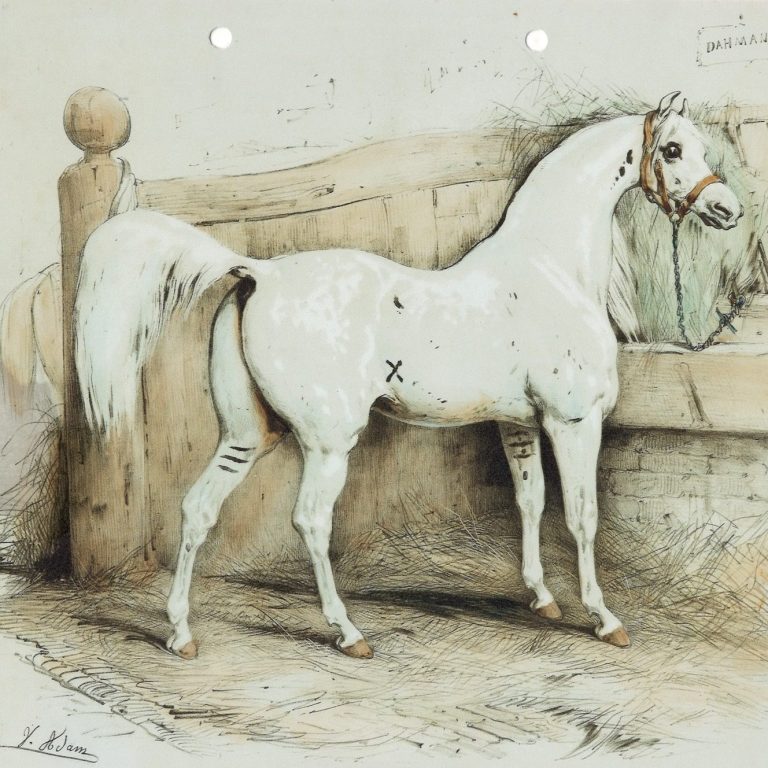
Viktor Adam
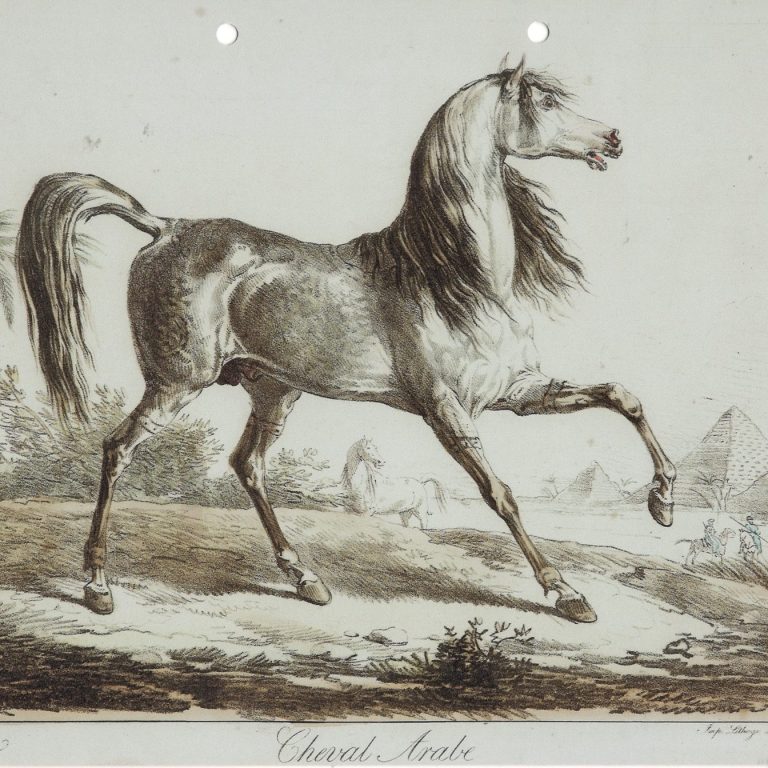
Charles Vernet
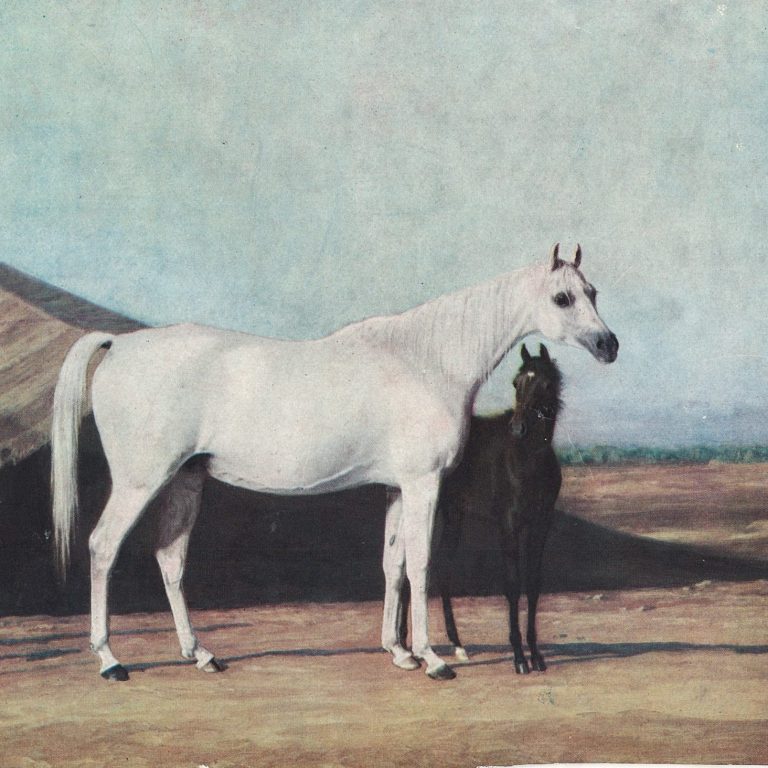
Lady Blunt's Sherifa
This type is documented in books and reports of travellers (Palgrave *) and numerous paintings by famous artists, showing imported Arabians from Egypt in the 19th Century. They were painted by Victor Adam, Charles Vernet (Stud of Wuertemberg in Germany & St. Clouds in France) and as well by paintings and drawings of Lady Anne Blunt.
These Arabians, the historical root stock of the El Zahraa Stud in Egypt, were considered by the Egyptian authorities as a heritage; NK Katharinenhof followed their example.
* William Palgrave, Reise in Arabien, Leipzig 1867
Breeding Principles
NK Arabians are bred following the principles of a modern well-studied breeding concept, which is based on a closed limited population. This concept is world-wide without comparison and applied since 40 years and
was established in 6 fundamental steps:
I. Clear definition of breeding purpose as Breeding for heritage “To preserve for the most beautiful horse breed in the world as an original"
II. Collection of knowledge by visiting and studying most of the major Arabian studs worldwide
III. Designing a breeding concept to reach the suitable purpose
IV. Choice of particular mares and stallions as future root stock
V. Application of well-proven selection methods
VI. Research-based decisions which sire to breed to which dam
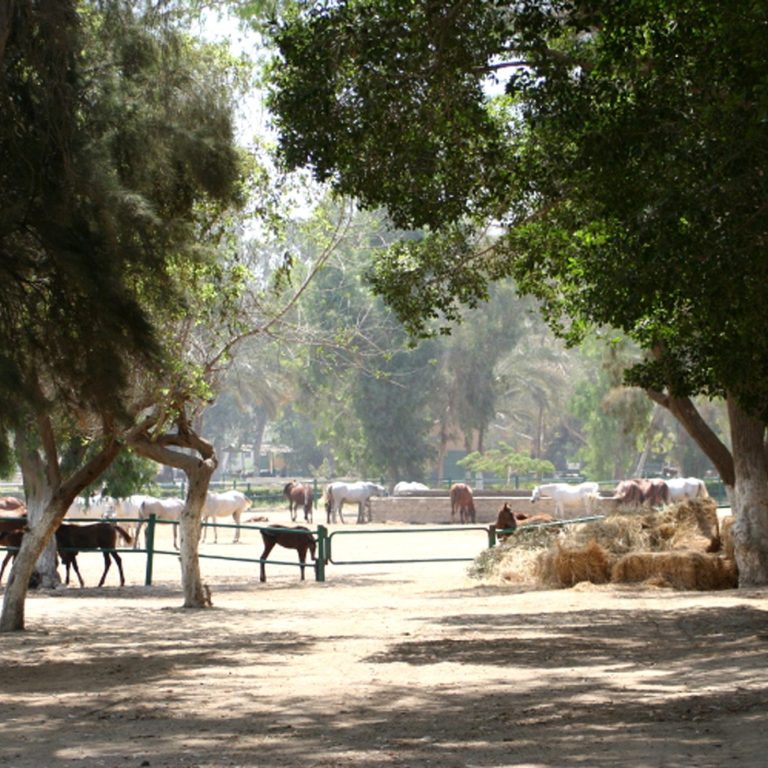
El Zahraa
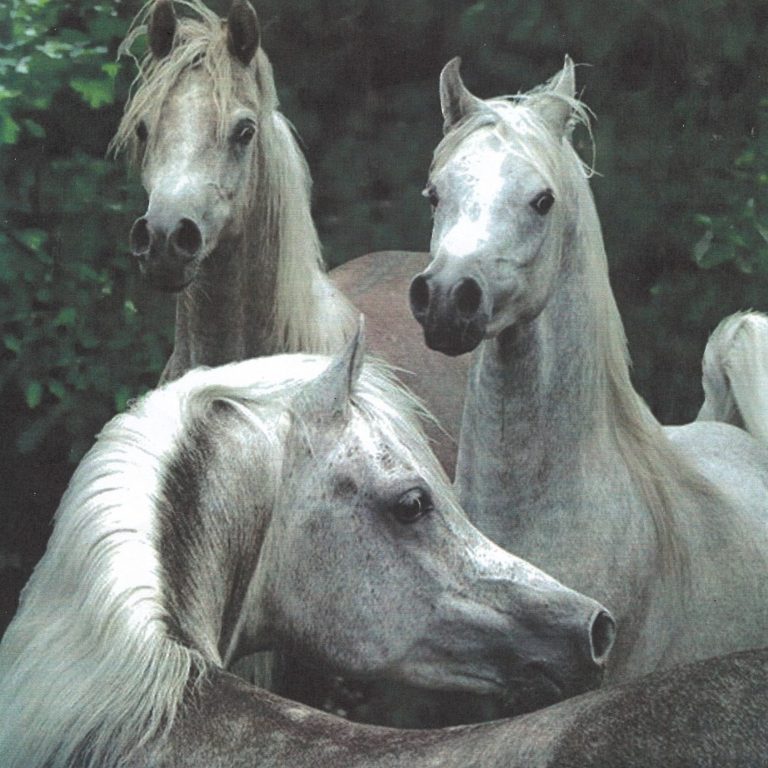
Rich in Type
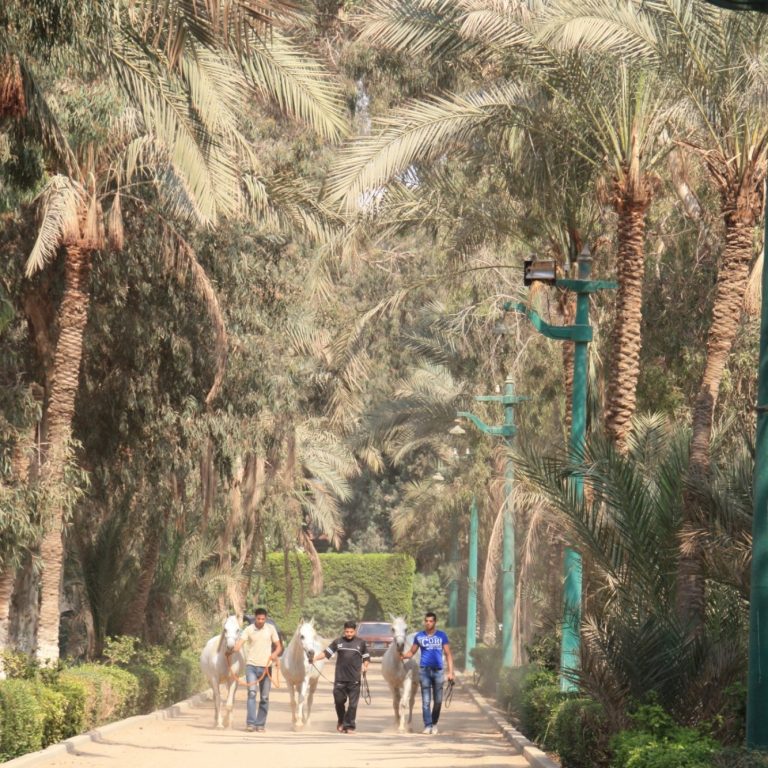
El Zahraa
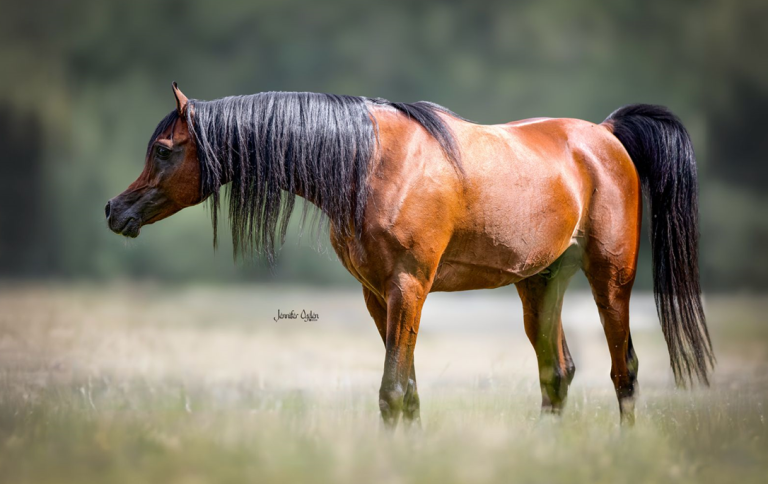
The suitable heritage-orientated breeding concept
The decision for a closed breeding concept was taken in order to increase and control the homozygosity in the breeding population. Only in populations with a limited number of horses, such a concept will be successful in order to breed Arabians of a similar type.
After a testing period of 16 years, 3 – 4 best mares were chosen from each the four families as root stock of the now closed population, all these horses were offspring from the original imports. From that time on, no other horse has entered into the NK Katharinenhof population, only own-bred ones were added, either as replacement or for enlarging the herd. The same practice applied for the stallions, all of them with the proviso that they belonged to the same sire line.
Choice of particular root mares and stallions
In order to chose the best available Arabian root stock, kept in the “El Zahraa Stud”, Egypt, the foal crop of the years 1964, 1965, 1966 and 1967 was intensively examined and finally 3 fillies were acquired in 1968.
Mahiba, 1967 by Alaa El Dine out of Mouna (Siglawy)
Lotfeia, 1968 by Alaa El Dine out of Bint Kamla (Hadban)
Hanan, 1968 by Alaa El Dine out of Mona (Obayan)
This choice was made with the generous assistance of Prof Dr Ameen Zaher, Deputy Minister of Agriculture, Egypt and breeding advisor to El Zahraa Stud.
The three root mares were chosen from the best of the Arabian horse families in El Zahraa Stud, Egypt. They passed the test of time until today.
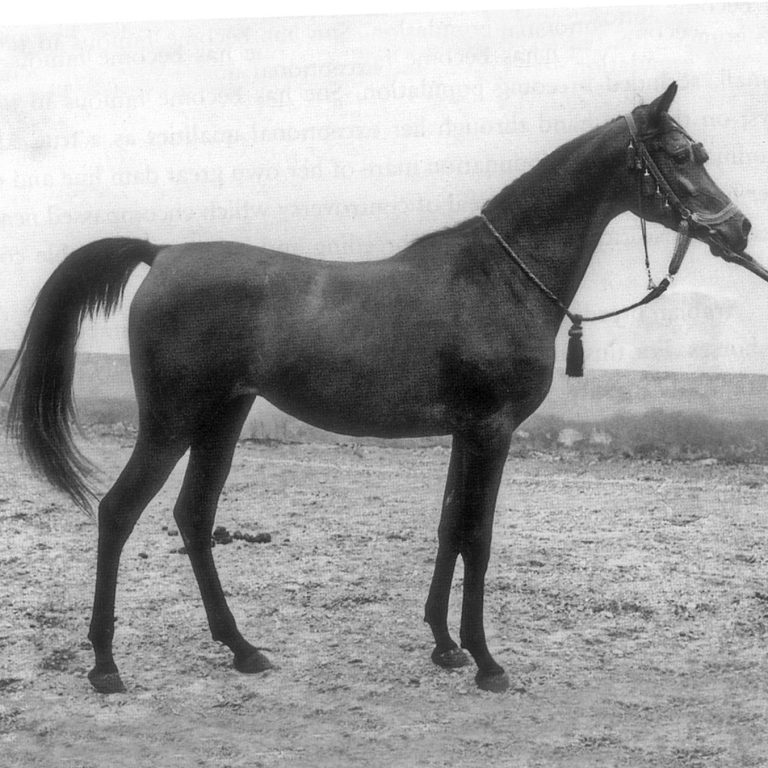
Hanan
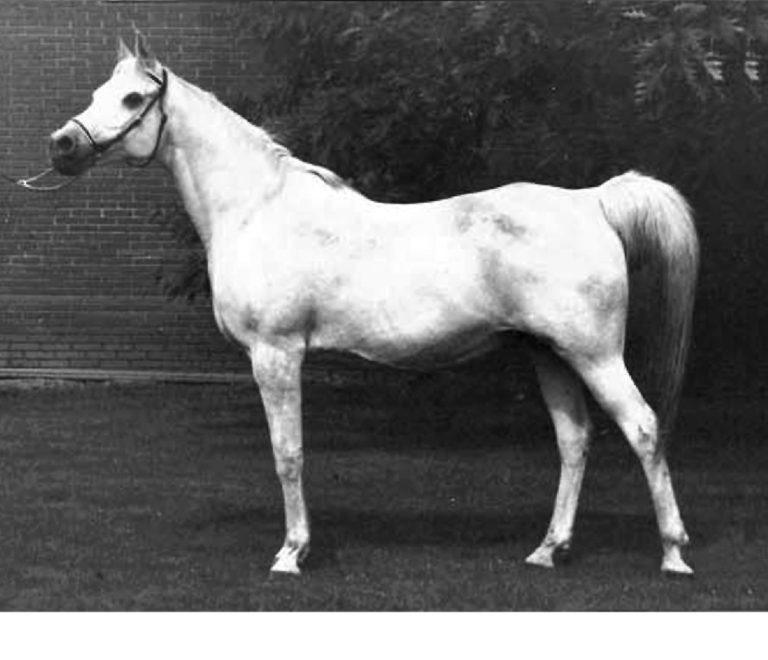
Lotfiea
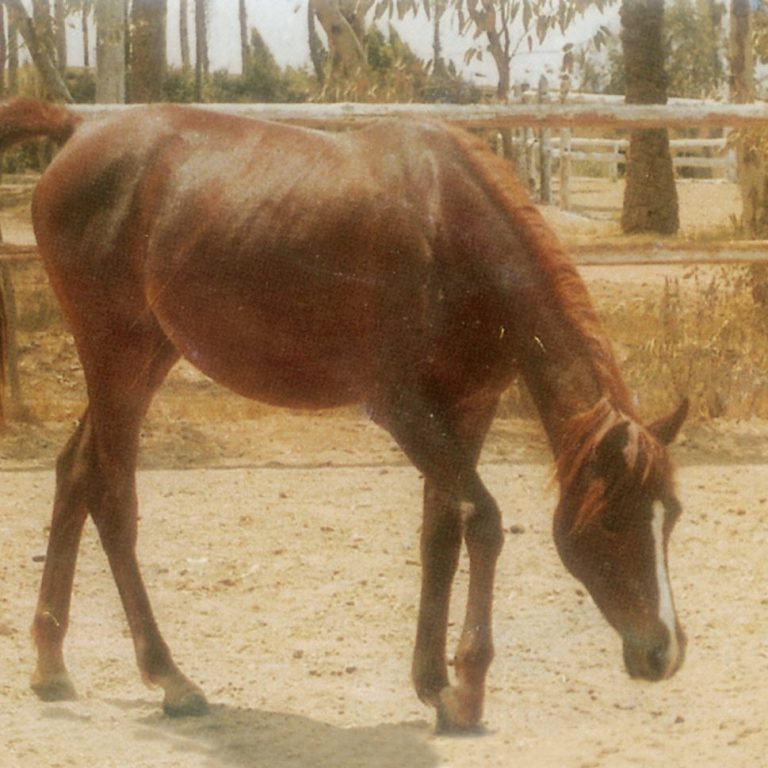
Mahiba
Two mares of the Dahman Shawan strain were purchased later from Ansata Arabian Stud in the US:
Ansata Gloriana, by Jamil out of Ansata Gazala
Ansata Prima Rose, by Jamil out of Ansata Rosetta
These five mares must meet all requirements to be the root stock for a long-term programme in respect of Arabian type, body conformation, a well-balanced temperament and good reliable health.
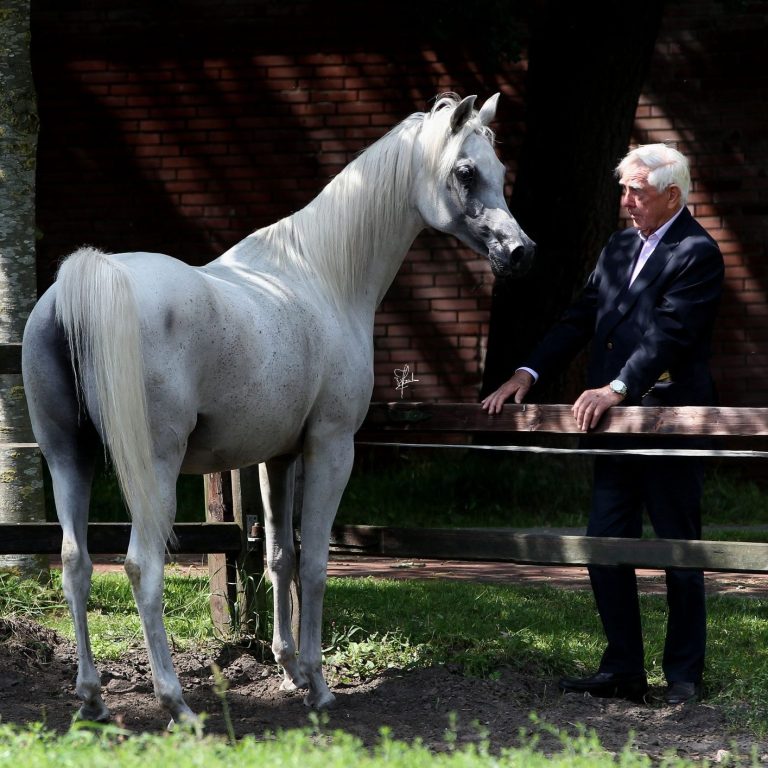
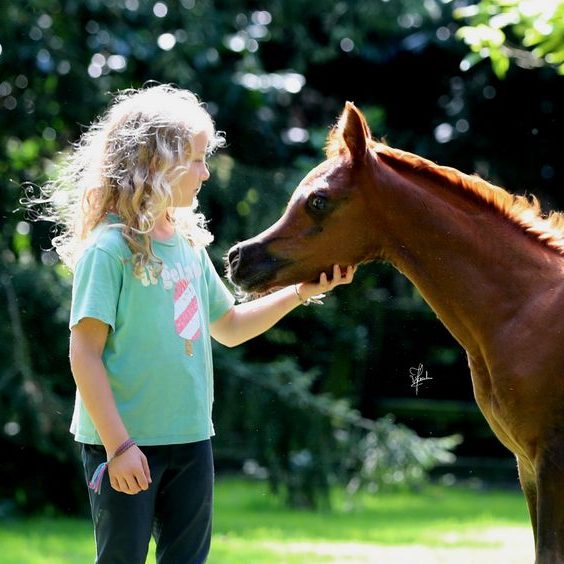
NK Arabians were selected with great care for brave behaviour combined with close human relationship.
Application of well-considered selection methods
Each horse, chosen and added to the breeding population, will be first properly examined by physical inspection - features and health condition - second, each one of them had to pass a progeny test, showing that its offspring proved to be satisfying, if not, the relative parent would be removed from the programme.
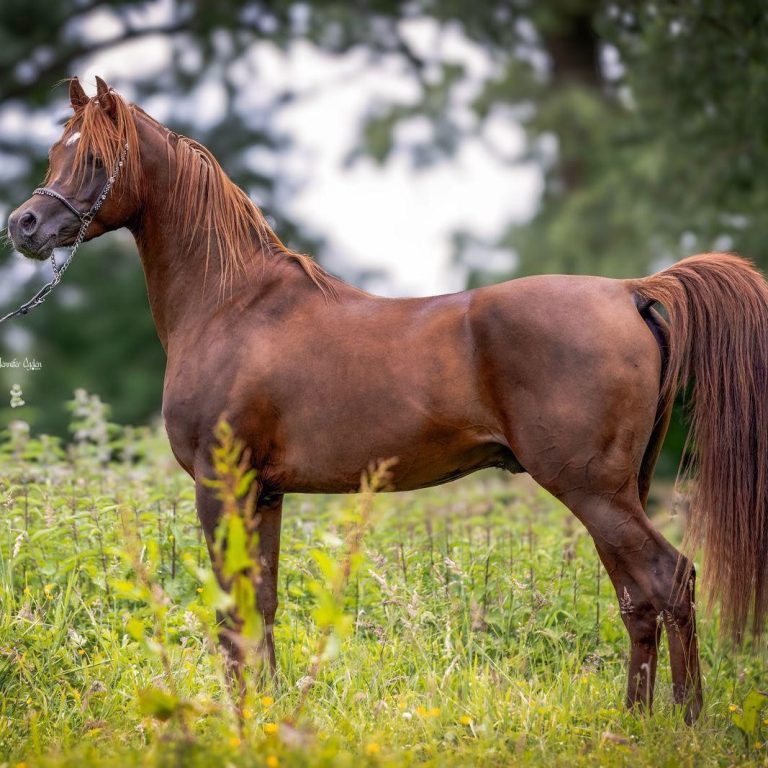
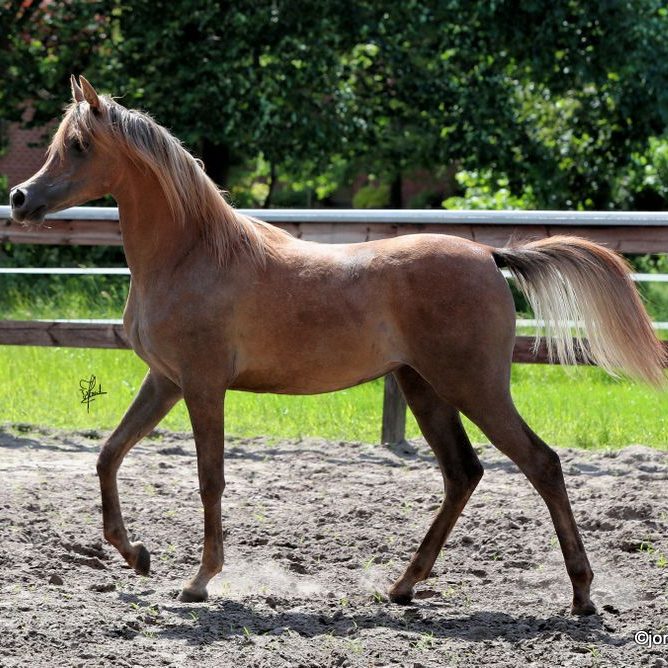
A well-balanced filly and a young stallion, both sired by the well-proven stallion NK Nabhan.
Proper decisions which sire to breed to which dam
By knowing each member of the population through experience, the choice for breeding stallions to mares was made in considering and guessing, which one of the parents might be more prepotent: sire, dam or one of the grandparents, all of them could be influential to a certain percentage in the bred offspring.
With the availability of new testing procedures, based on DNA, parental relations can now be more determined. A cooperation with the Florida University, guided by Professor S. Brooks was established. The obtained data are offering a solid guidance for breeding decisions and are a proper tool for monitoring as well. At the same time, it became very clear that the usual pedigree documents are just good enough for identification, but a very poor guidance for breeding; and so many efforts, which were made in the past for whatever reasons, based on pedigree material, have lost - due to new evidence - most of their credibility.
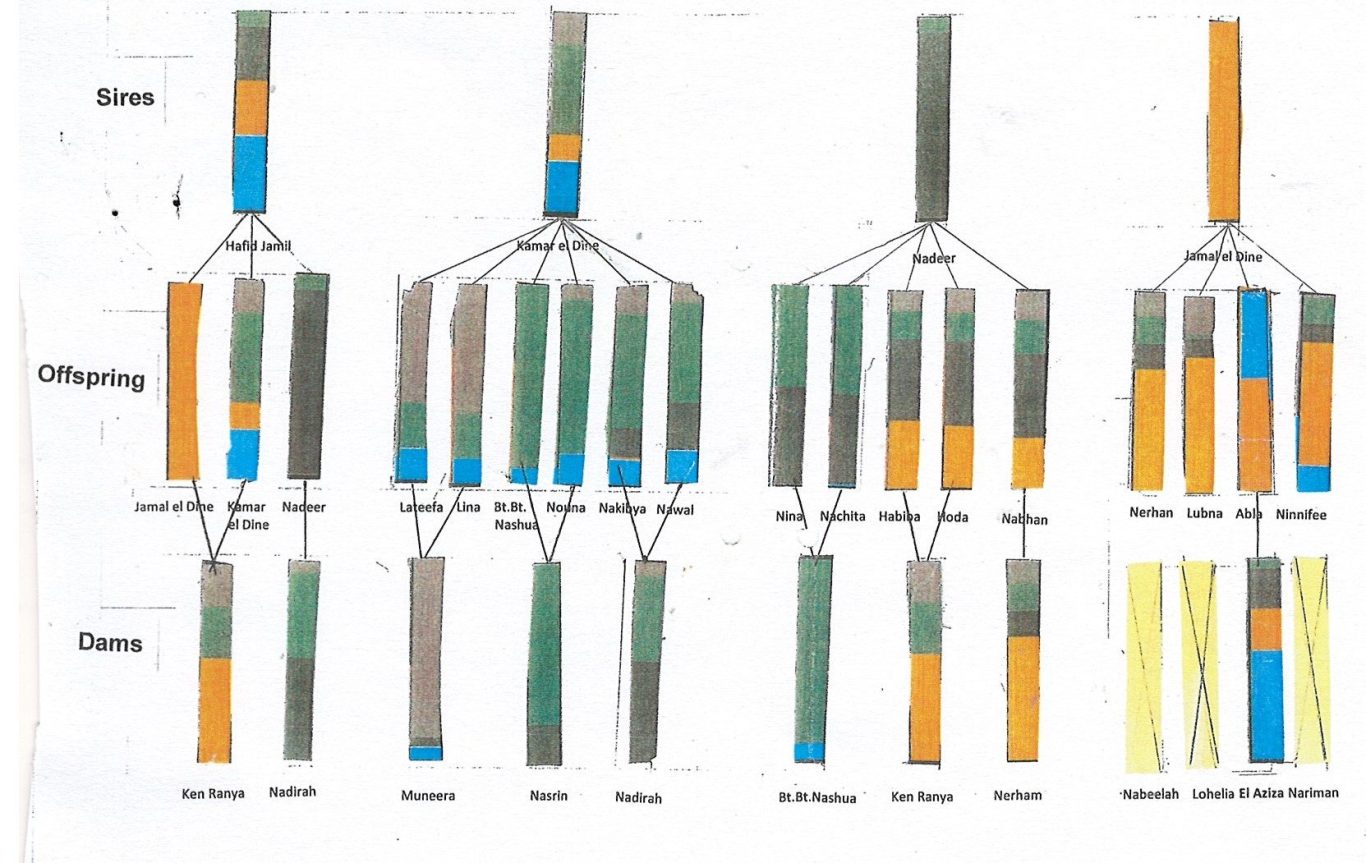
This scheme shows the parental relations between some of the important NK Arabians within the breeding concept, based on DNA analysis.
©Copyright Nagel 2025. All rights reserved.
Wir benötigen Ihre Zustimmung zum Laden der Übersetzungen
Wir nutzen einen Drittanbieter-Service, um den Inhalt der Website zu übersetzen, der möglicherweise Daten über Ihre Aktivitäten sammelt. Bitte überprüfen Sie die Details in der Datenschutzerklärung und akzeptieren Sie den Dienst, um die Übersetzungen zu sehen.